From a conversation to a credible plan.
Calibro Plan reads a meeting transcript, a Confluence page or one typed sentence, and reads back what it understood — with every quote located in the source before it is shown. Then it asks the two or three questions that would change the plan, proposes the smallest useful set of documents and work, and creates the pages, the epic and the stories only after you've read every draft.
Not released yet. Registering tells us to email you when it is — nothing else.
The readback first, then the work it becomes
The first frame is where every plan starts: what Calibro thinks you said, next to who said it. The rest follow one plan from the questions worth asking to the epic it turns into — and what it looks like weeks later.
Screenshots show sample data, not a real customer's instance.
It reads it back before it plans
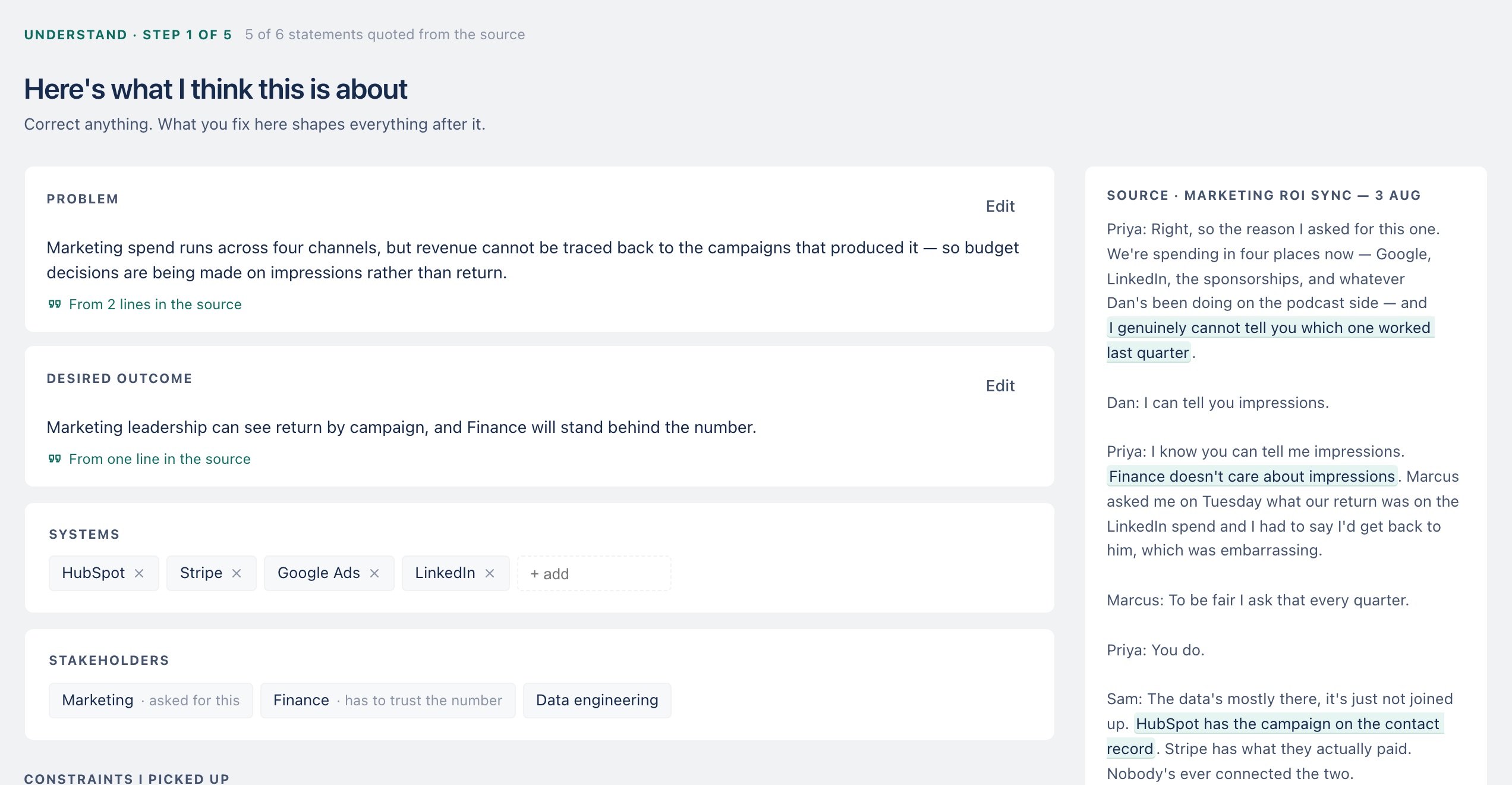
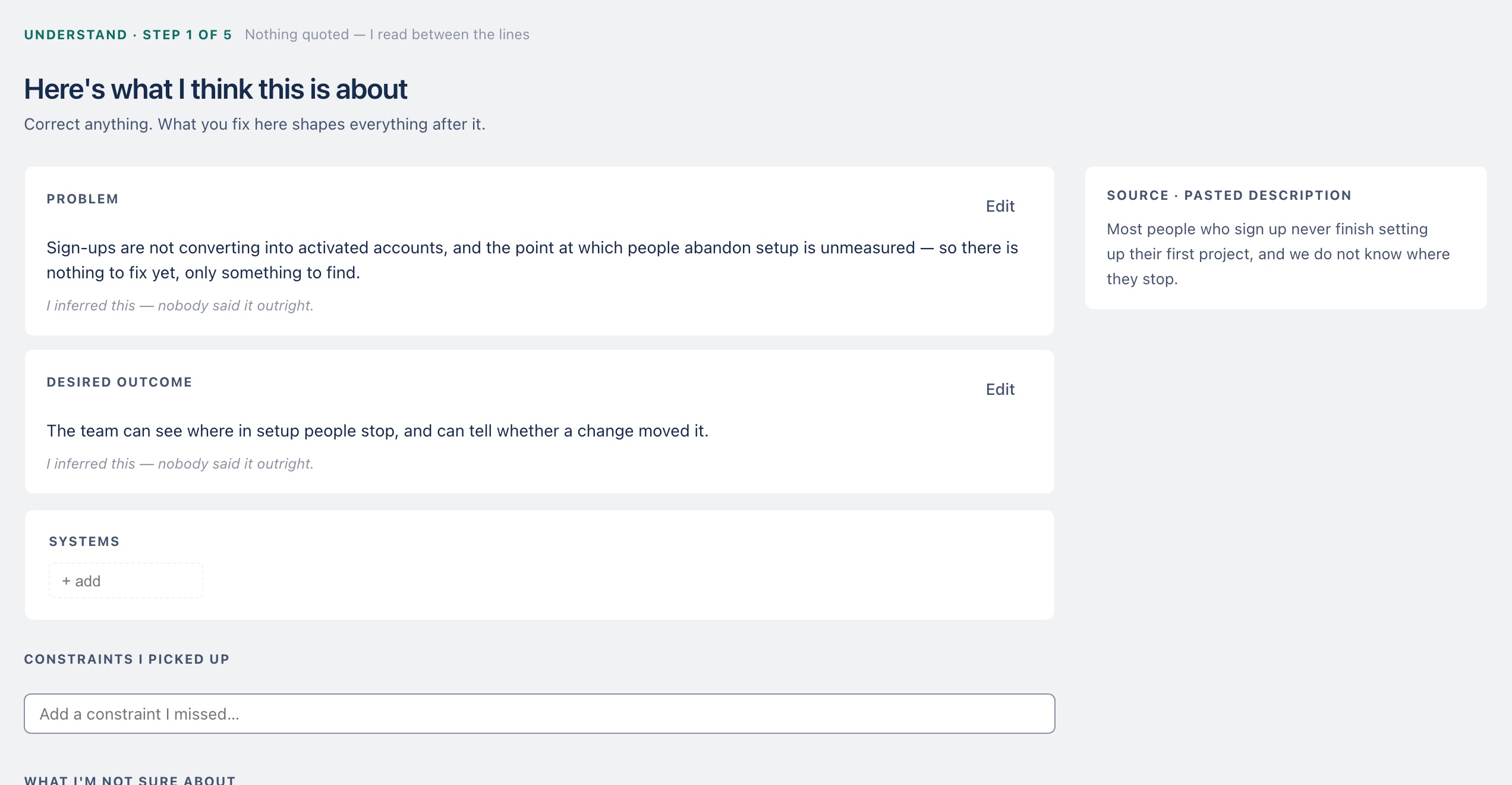
The first screen is what Calibro understood — problem, outcome, systems, stakeholders, constraints — next to the source, with the lines each statement came from highlighted. What you correct there shapes everything after it, which is cheaper than correcting the epic.
A quote is checked before it is shown
Every quote the model supplies is located in the source text first. One that cannot be found is discarded and its claim is labelled an inference — the screen says nobody said it outright, rather than showing a citation that does not exist. Reading between the lines is legitimate; looking like a quotation has to be earned.
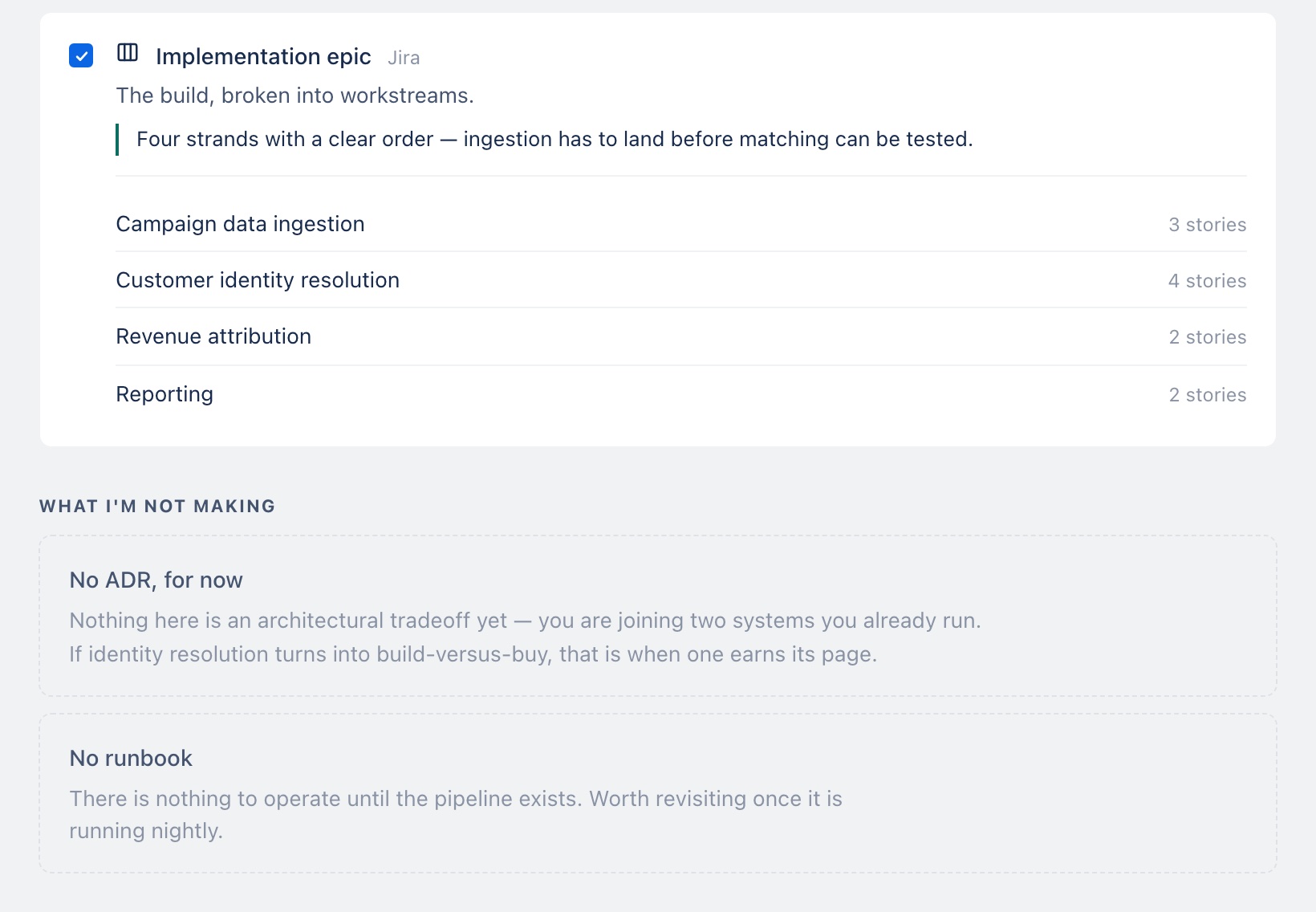
It says what it isn't making
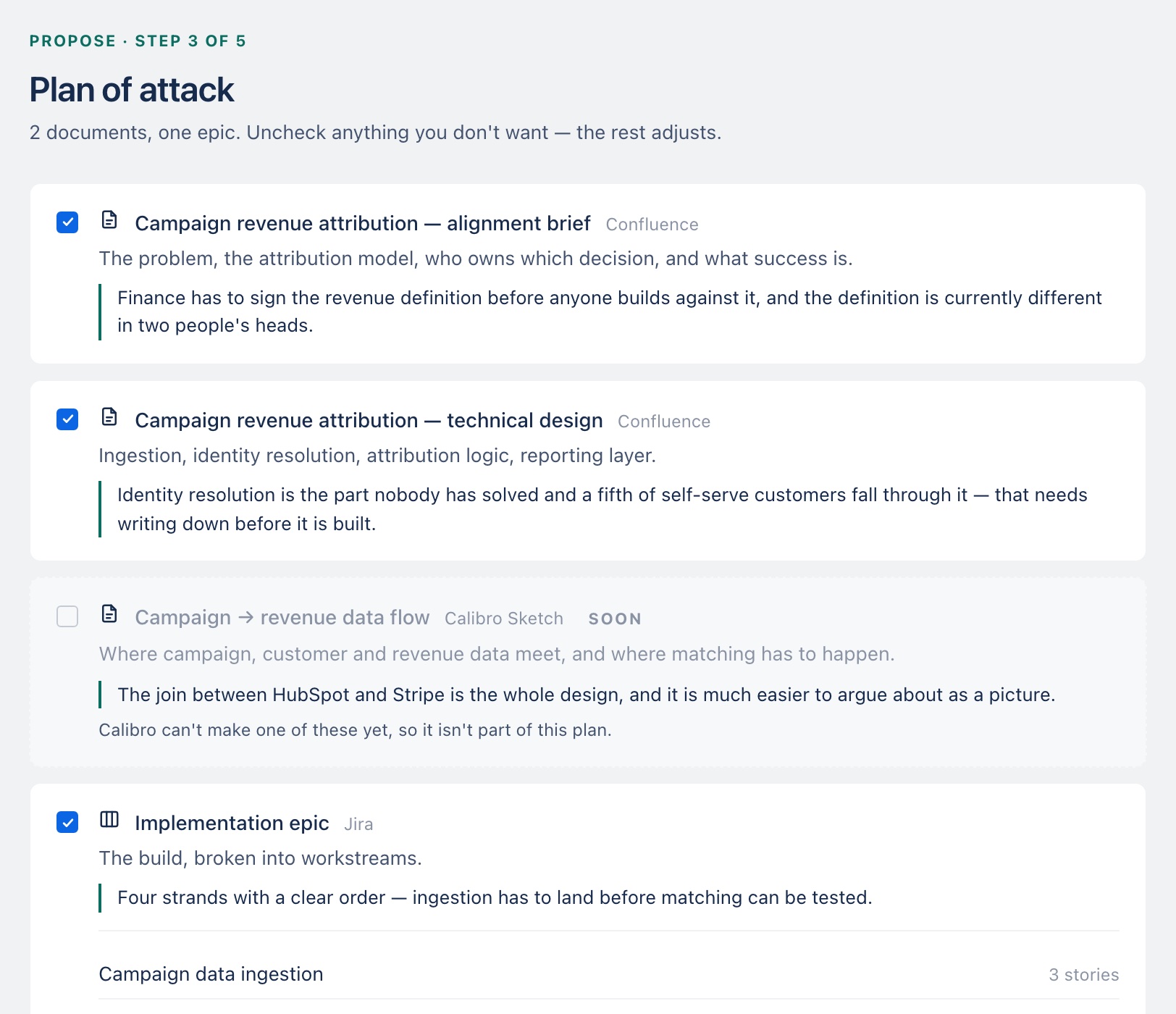
The proposal lists declined artifacts with reasons — no decision record, because nothing here is an architectural tradeoff yet. The create step ends the same way, with a receipt naming what it did not do. A proposal that only ever adds things is a generator, not a planner.
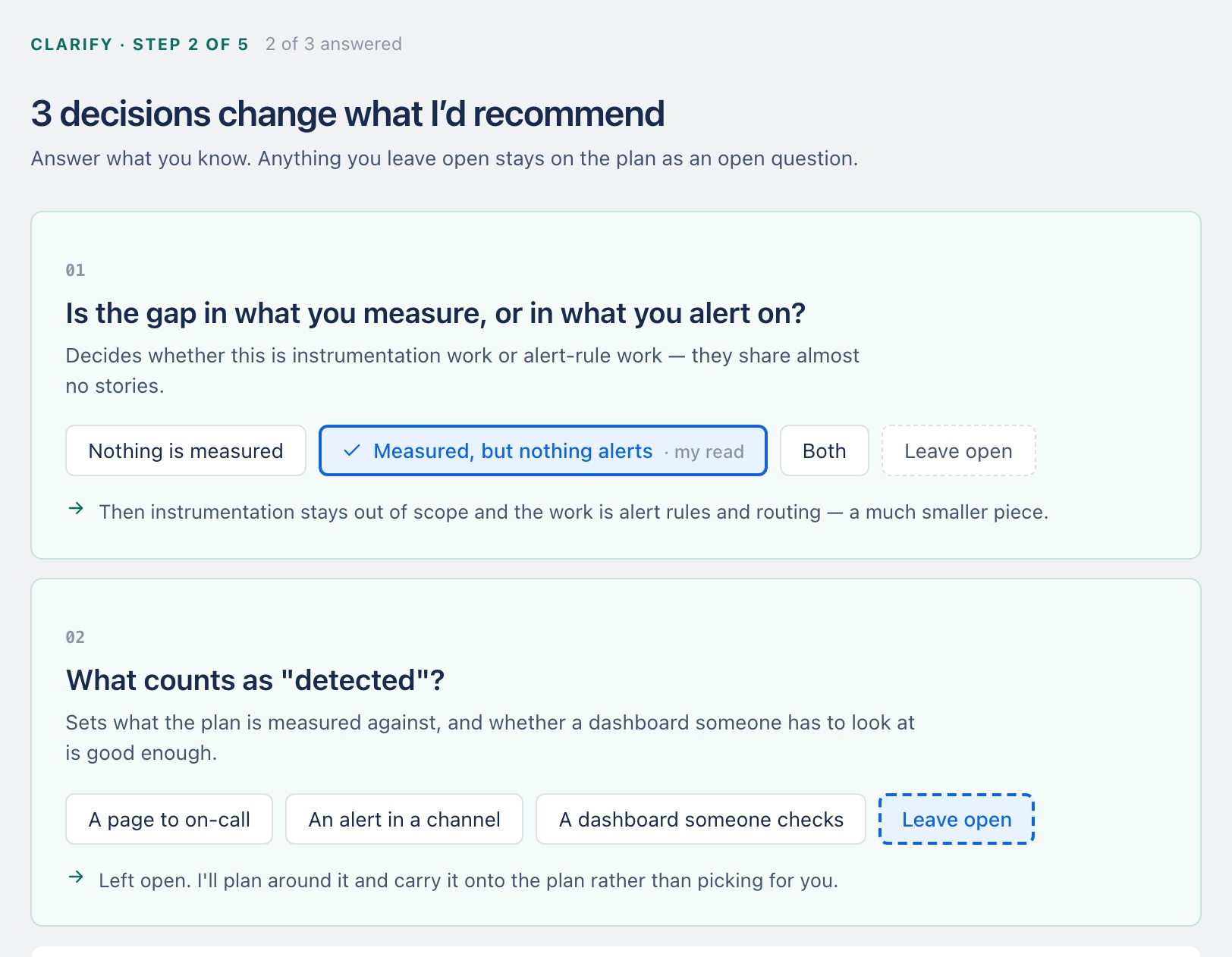
"Leave open" is a real answer
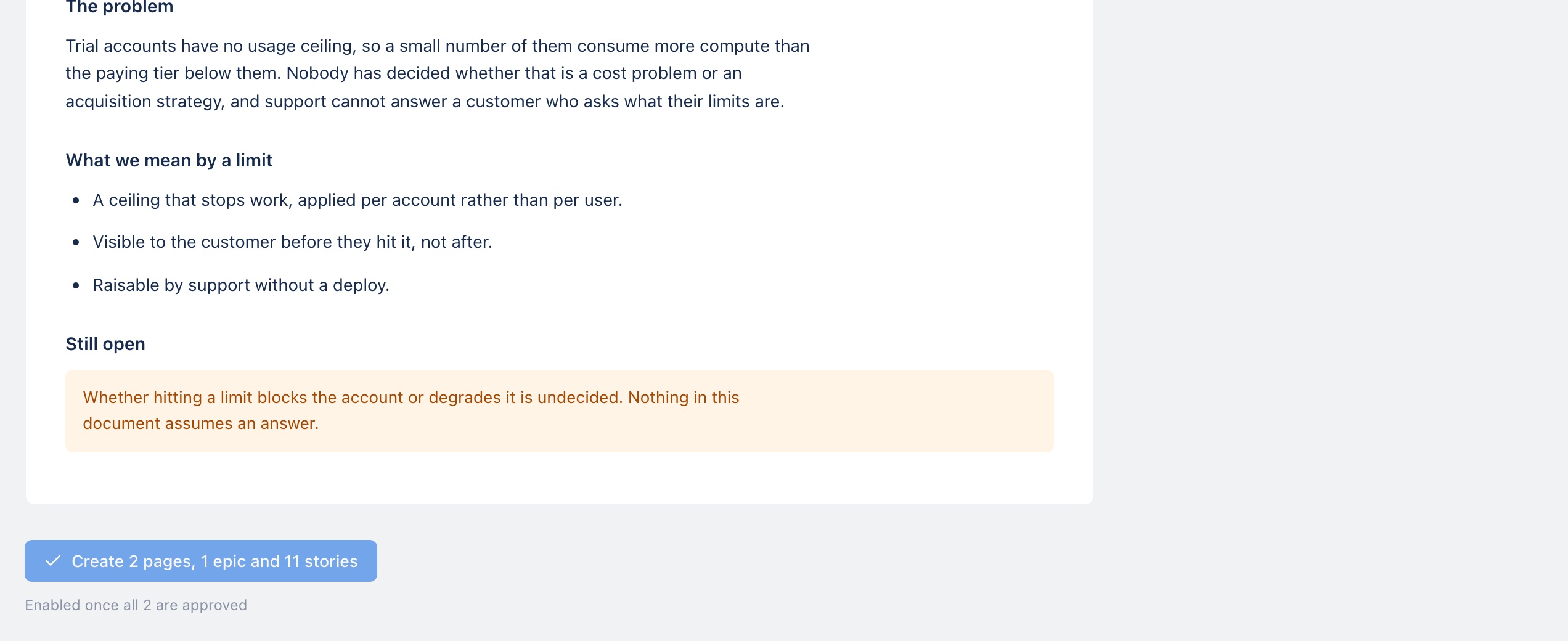
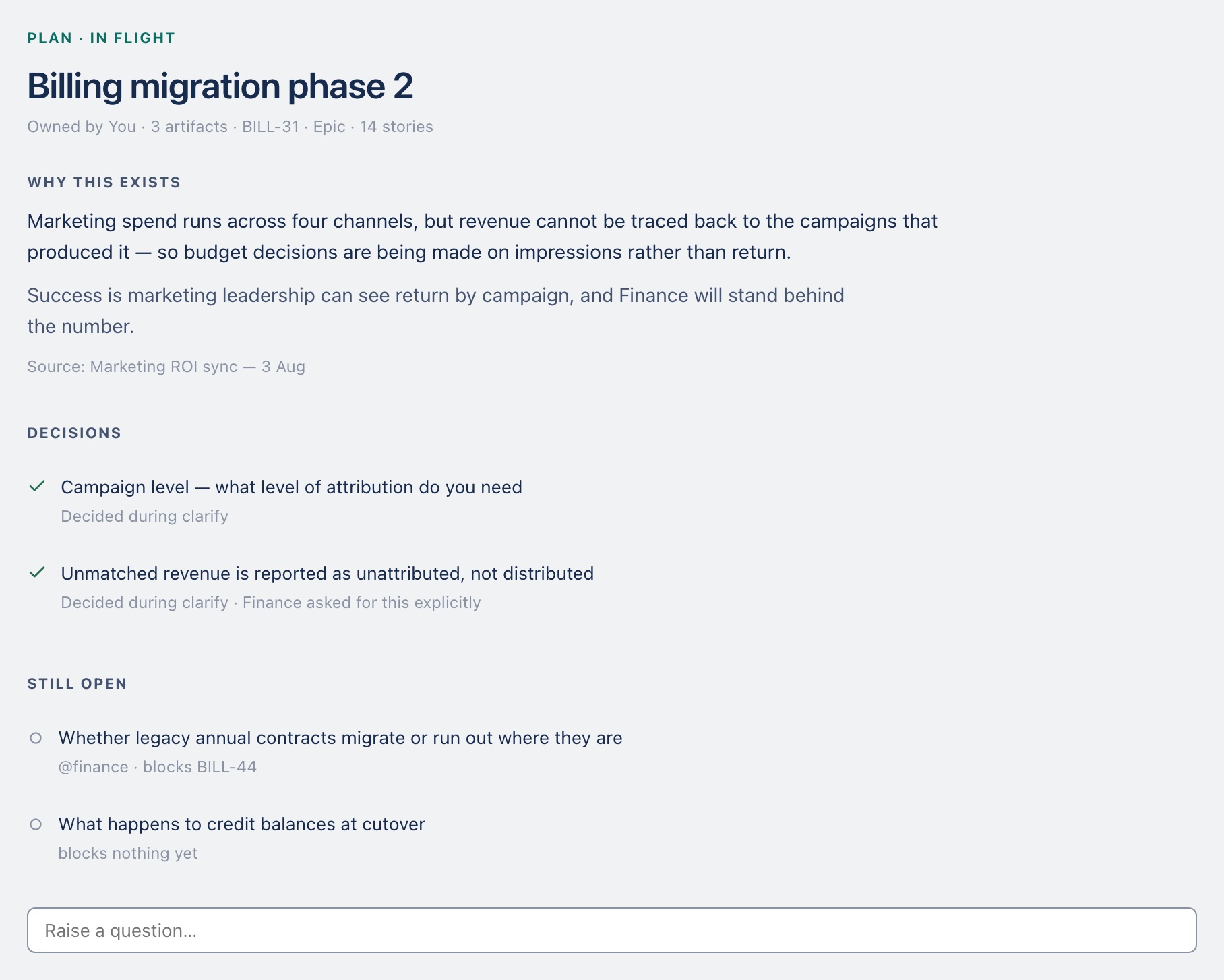
A team that must resolve every question before it can see a plan will resolve them by guessing. An open question rides along instead: the model plans around it, and every generated document carries it in a "Still open" section — so nothing reads as settled when it deliberately isn't.
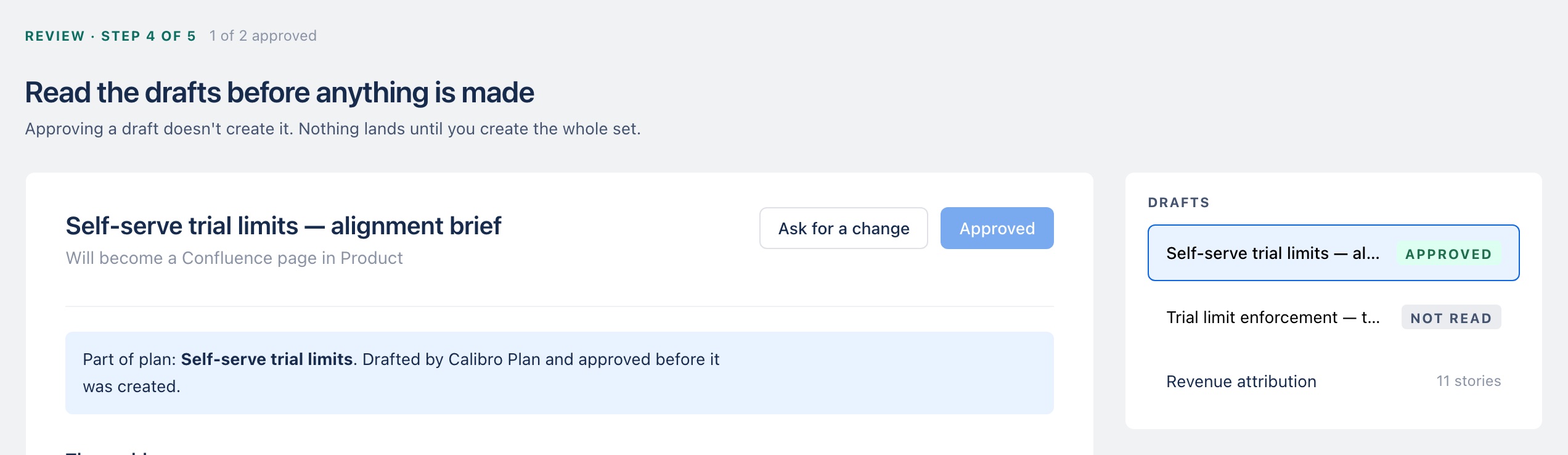
Approving isn't creating
Approval is a reading gesture — reversible, free, one document at a time. Creation is one button at the end that names exactly what it will make and stays disabled until every draft is approved. You can move through four documents quickly without ever wondering whether you've already committed.
Nothing leaves your site
Built entirely on Atlassian Forge, like Track, Sketch, Test, Pulse, Explore and Prioritize — and this is the first Calibro app with a model in it. The model is Atlassian-hosted, running inside your own site through the Forge LLMs API: the app declares no external egress, so there is nowhere for a transcript to travel to.
It isn't finished, and we'd rather say so.
Calibro Plan works — the screenshots on this page are the real interface, not a mockup — but it is not on the Marketplace and there is no date on it yet.
The thing we most want to hear is what your planning actually starts from — a transcript, a page, a hallway sentence — and whether the readback survives contact with it. A planning tool earns its keep the day the brief it drafted is the one the team argues over.
So: no launch date, no waiting list theatre, no drip campaign. One email when there's something to install.
Where it's up to
Want it?
Leave an address and we'll tell you when it's installable. That's the whole commitment — for you and for us.